




Mon. Apr 27th, 2026

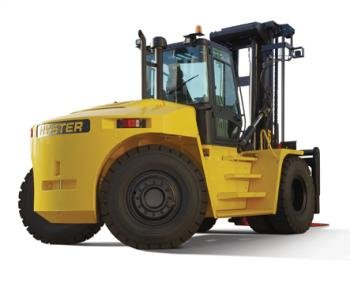
As economic prospects show signs of a long awaited revival, many businesses are looking at their cash flow and revising their investment plans. Equipment efficiency is one of the options up for revision. After years of postponing investment in new forklift trucks and making do with older stock, owners of warehouses, material handling businesses and even retail outlets are finally looking for replacements.

The real interest is focused on how technical improvements have increased the efficiency of the new generation of forklift trucks. All business plans are geared to improving operational costs and gaining a competitive advantage. Before the recession, a plant manager had a more conservative mind-set – sticking to what they know without taking any risks. Nowadays, with competition fiercer and profit margins still squeezed, that new truck investment may make all the difference.

Automatic forklifts

Automatic guided vehicles and other programmable trucks that can be seen on are receiving the greatest attention. Whether buying or leasing a new truck, businesses are looking to control labour costs. Labour accounts formerly 80 per cent of a forklift’s operational costs so an automated vehicle can make sense.

These trucks are designed to travel continuously along the same route transporting similar goods. They work all day moving from one point to another like a robot. They move at a constant speed and have collision detection systems. Not only does this improve product safety, it allows the former truck operator to move from an extremely boring job to something of greater interest.

Automated vehicles also cut out the downtime needed for charging batteries. They use super capacitors for power that need little maintenance and can be recharged in only seconds.

The only downside here is that it could take a month or more to install this equipment on business premises. The cost is also a significant investment but it will bring improvements in efficiency and product safety.

Telematics

Put together telecommunications and data gathering and the product is telematics. This is a technology that provides businesses owners with a real time tracking capability. It tracks speeds, faults, impacts, brake problems during operations and combines them with historic data that has been programmed into the system. Its end emails to a control when faults occur. The result is that a business can see precisely how its costs are affected. It also eliminates hefty paperwork and logging that forklift operators have to fill in every day.

Mobile technology

Taking an iPad or other tablet on a forklift may sound crazy, but it is a cheaper way to computerise the trucks operations. Rather than installing complicated circuitry in the trucks, the tablet can be removed easily at the end of the working shift for data analysis. The costs of 捷凯金融 this installation may be only about a quarter or even one-sixth of those for a mounted computer. A lot of glitches remain to be resolved, however. The batteries of truck and tablet have to be compatible and some tablets may not be robust enough for material handling work environment.

By Abby Waechter

Abby Waechter is an accomplished journalist, editorial strategist, and digital publishing professional with over six years of hands-on experience in the media industry. As the Editor-in-Chief of 8Blogs.com, she leads the editorial vision of one of the web's most ambitious business and industry publications — a platform dedicated to delivering sharp, credible, and actionable content for professionals, entrepreneurs, and industry leaders across the globe. Abby's journey into the world of professional writing and editing began long before her byline appeared on any publication. Growing up with a natural curiosity for how businesses work, how economies shift, and how leadership shapes organizations, she found herself drawn to the intersection of journalism and business from an early age. That passion led her to Ohio University — one of the United States' most respected public research universities, located in Athens, Ohio — where she pursued a Bachelor's degree in Journalism and Communications. Ohio University's School of Media Arts and Studies gave Abby a rigorous academic foundation in editorial ethics, news writing, investigative reporting, audience analysis, and multimedia storytelling. It was here that she developed the disciplined writing habits and critical thinking skills that would define her professional career. She graduated with a deep understanding of what separates good content from truly great content — and a firm commitment to always delivering the latter. Before stepping into a full editorial role, Abby gained invaluable real-world experience through internships at newspapers, regional magazines, and online publishing companies. These early career placements were formative. Working in fast-paced newsrooms taught her how to research under pressure, verify facts rigorously, and write with clarity and precision on tight deadlines. Her internship experiences also gave her a front-row seat to the rapid transformation of media — from print-first thinking to digital-first strategy — a shift she embraced fully and has championed ever since. Over the following six to seven years, Abby built a diverse and impressive portfolio spanning writing, reporting, editorial assistance, and content strategy. She has covered topics ranging from startup ecosystems and venture capital trends to leadership philosophy, workplace culture, global trade, and emerging technologies. Her work is consistently praised for being well-researched, reader-friendly, and genuinely insightful — never sacrificing depth for the sake of brevity, nor clarity for the sake of complexity. At 8Blogs.com, Abby oversees a broad editorial mandate that spans twelve content categories including Entrepreneurship, Finance, Marketing, Technology, HR, Sustainability, and Global Business. She sets the tone, maintains editorial standards, and ensures that every article published reflects the publication's core values — integrity, depth, and practical intelligence. When she is not editing or writing, Abby stays close to the business world through industry events, professional reading, and mentoring emerging writers who are just beginning their own editorial journeys.