



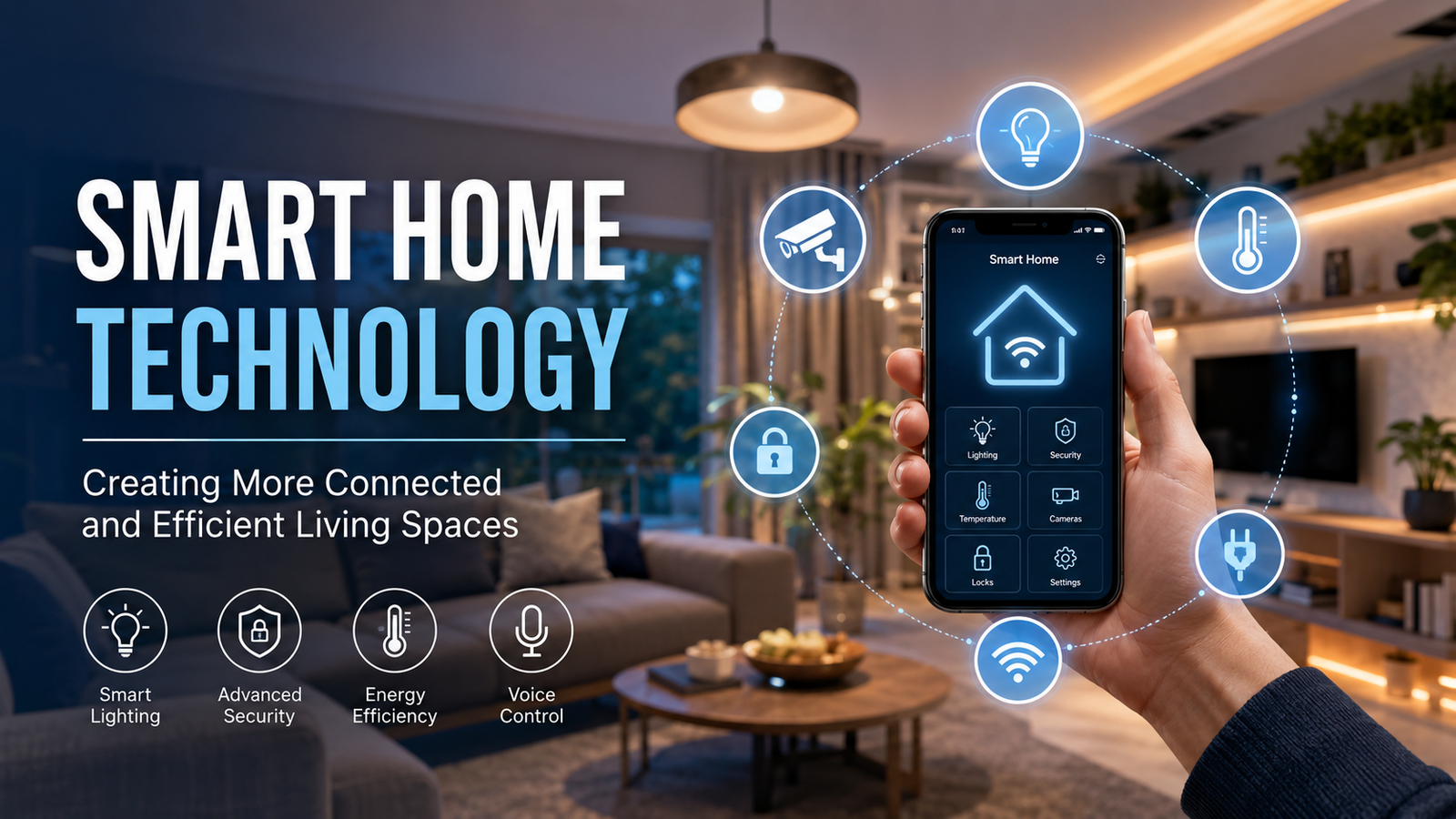
Modern homes are becoming smarter, more connected, and increasingly designed around convenience. What once felt futuristic is now part of everyday life. From lights that adjust automatically to security systems controlled from a phone, smart home technology is changing how people interact with their living spaces.
The appeal of smart homes goes far beyond novelty. Smart devices can improve comfort, increase energy efficiency, strengthen security, and simplify daily routines. Whether someone wants to save electricity, monitor their property remotely, or automate repetitive tasks, connected technology offers practical solutions for modern living.
The best part is that smart home systems are no longer limited to luxury properties or technology enthusiasts. Many devices are affordable, easy to install, and designed for beginners.
What Is Smart Home Technology?
Smart home technology refers to internet-connected devices that automate or remotely control functions within a home. These devices often communicate through Wi-Fi, Bluetooth, or dedicated smart home hubs.
Instead of manually operating lights, heating, appliances, or security systems, homeowners can manage them using mobile apps, voice assistants, schedules, or automation settings.
Common smart home categories include:
- Smart lighting
- Smart thermostats
- Home security systems
- Smart speakers and voice assistants
- Connected kitchen appliances
- Smart plugs and switches
- Automated blinds and curtains
- Smart entertainment systems
The goal is to create a home environment that responds more efficiently to daily habits and personal preferences.
Why Smart Homes Continue to Grow in Popularity
Smart home adoption continues to increase because connected devices solve real everyday problems. Many people initially invest in smart technology for convenience, but they often discover additional benefits over time.
Greater Convenience
One of the biggest advantages is the ability to control multiple systems from a single device. A smartphone can manage lighting, heating, cameras, door locks, and appliances from almost anywhere.
Simple automations also reduce small daily tasks. Lights can turn off automatically at night, thermostats can adjust when nobody is home, and coffee machines can start before waking up.
These small improvements often create a smoother and less stressful routine.
Improved Energy Efficiency
Energy efficiency is another major reason homeowners adopt smart technology.
Smart thermostats learn household routines and reduce unnecessary heating or cooling. Smart lighting systems switch off automatically when rooms are empty. Smart plugs prevent appliances from consuming standby power.
Over time, these adjustments can lower electricity bills while reducing overall energy consumption.
Better Home Security
Modern smart security systems provide far more control than traditional alarms alone.
Homeowners can receive real-time alerts, view live camera footage, lock doors remotely, and monitor activity from anywhere. Video doorbells also allow residents to speak with visitors without opening the door.
For many households, the ability to check on their home while travelling provides significant peace of mind.
Popular Smart Home Devices
Smart Lighting
Smart lighting is often the easiest starting point for beginners.
Connected bulbs and switches allow users to control brightness, colours, and schedules through an app or voice assistant. Lights can also respond to motion sensors or activate automatically at sunset.
Beyond convenience, smart lighting can improve ambience while helping reduce energy waste.
Smart Thermostats
Smart thermostats monitor household temperature patterns and adjust heating or cooling automatically.
Many systems learn daily routines over time. They may reduce energy use while occupants are away and restore comfortable temperatures before they return home.
This combination of comfort and efficiency makes smart thermostats one of the most practical long-term investments.
Smart Security Systems
Connected cameras, smart locks, motion sensors, and video doorbells now form the foundation of many modern home security setups.
Features commonly include:
- Remote monitoring
- Motion alerts
- Cloud video storage
- Two-way communication
- Emergency notifications
Some systems also integrate with lighting and alarms for more advanced automation.
Voice Assistants and Smart Speakers
Voice assistants simplify smart home management by allowing users to control devices using spoken commands.
Tasks such as playing music, checking weather updates, setting reminders, or adjusting lights become faster and more accessible.
Many households use voice assistants as the central control point for multiple connected devices.
Building a Smart Home Without Overspending
Creating a smart home does not require replacing everything at once. A gradual approach is usually more practical and affordable.
Many homeowners begin with one or two devices before expanding their setup over time.
A smart home starter setup might include:
- Smart bulbs
- Smart plugs
- A voice assistant
- A video doorbell
- A smart thermostat
Starting small allows homeowners to understand how connected devices fit into their lifestyle before investing further.
The Importance of Device Compatibility
One of the most common mistakes is purchasing devices that do not work well together.
Before buying new products, it is important to check compatibility with existing systems and preferred voice assistants. Some ecosystems integrate more smoothly than others.
Choosing devices from compatible platforms creates a more reliable and easier-to-manage smart home experience.
Understanding Smart Home Security Risks
While smart technology offers convenience, internet-connected devices also introduce privacy and cybersecurity concerns.
Weak passwords, outdated software, and unsecured networks can create vulnerabilities.
To improve security:
- Use strong passwords
- Enable two-factor authentication
- Keep device software updated
- Secure home Wi-Fi networks
- Buy products from reputable brands
Good digital security habits are just as important as physical home security.
Smart Homes and the Future of Everyday Living
Smart homes are continuing to evolve rapidly. Artificial intelligence, automation, and machine learning are making devices more responsive and personalised.
Future systems may better predict household routines, optimise energy use automatically, and improve accessibility for elderly or disabled residents.
As connected technology becomes more common, smart homes are likely to become a standard part of modern living rather than a specialised upgrade.
FAQs
1. What is a smart home?
A smart home uses internet-connected devices to automate and control household systems such as lighting, security, heating, and appliances remotely or through voice commands.
2. Are smart homes expensive to set up?
Smart homes can be affordable because many homeowners begin with basic devices like smart bulbs or plugs before expanding their setup gradually over time.
3. Do smart home devices save energy?
Yes. Smart thermostats, lighting systems, and plugs can reduce unnecessary energy consumption by automating usage and improving efficiency.
4. Is smart home technology secure?
Smart home systems can be secure when users choose trusted brands, update software regularly, use strong passwords, and protect their Wi-Fi networks properly.
5. Which smart home device is best for beginners?
Smart lighting and smart speakers are often the easiest entry points because they are simple to install, affordable, and easy to use daily.
Conclusion
Smart home technology is transforming how people experience comfort, convenience, and efficiency within their homes. Connected devices now support everything from lighting and security to heating and entertainment, helping households save time, improve safety, and reduce energy use.
The most successful smart homes are not necessarily the most advanced. They are the ones designed thoughtfully around real daily needs. Starting with simple, compatible devices often creates the best long-term experience while allowing homeowners to expand gradually over time.
As technology continues to evolve, smart homes will become even more integrated into everyday life. For many households, connected living is no longer a futuristic idea but a practical and increasingly valuable part of modern home design.
 Nyla Sharon